From competitive dialogue to full-scale realisation.
Two emblematic projects define our activity: the SWAC cooling of CHU Sud Réunion hospital, and the MAEVA programme, bringing the OTEC Lab simulator into operation to test deep-sea thermal energy applications in real conditions.
EER > 10
performance requirement set by CHU Sud Réunion
30 yrs
cooling-supply contract (CHU Sud Réunion)
6 steps
methodology of our OTEC Lab
Project #01 · June 2019
Cooling the CHU Sud Réunion hospital.
A heavy electricity consumer, particularly for the cooling needed across its premises, CHU Sud Réunion was identified by EDF as a strong candidate site for a SWAC project.
SWAC & ocean energy
SWAC for a major hospital site.
Initial studies were carried out, with EDF and with the support of ADEME, to integrate this technology on site.
Those studies were conclusive enough that the hospital, still supported by EDF, ADEME and the Region, launched a competitive dialogue procedure in June 2017 to implement this solution and reduce its energy bill.
Unwilling to carry the investment itself, the hospital preferred a 30-year cooling-supply contract, requiring an EER above 10 from bidders.
EER (Energy Efficiency Ratio) measures the energy efficiency of cooling solutions. An EER of 10 means only 1 kWh of electricity is needed to produce 10 kWh of cooling, a sharp break from conventional systems (EER 2.5 to 3.5).
EER > 10
performance set in the specifications
30 yrs
cooling-supply contract
3 to 4×
vs conventional systems (EER 2.5-3.5)
CHU project updates
From competitive dialogue to realisation.
Launch of the competitive-dialogue procedure
CHU Sud Réunion, supported by EDF, ADEME and the Region, launches the competitive-dialogue procedure to implement the SWAC solution and reduce its energy bill.
Award of the cooling-supply contract
30-year contract with an EER above 10, a strong commitment to the energy transition.
Secondment to Réunion: PEMER working group
Our teams are seconded to Réunion to take part in the PEMER working group. Goal: defining the specific challenges of marine renewable-energy technologies in Réunion.
3 underwater missions to develop the project
Three underwater missions were carried out, including the investigation of the discharge area of our micro-tunnel down to 60 m, to better understand the environment and check the presence of corals at the device's location. A strong environmental requirement baked into the project.
All project authorisations obtained
Obtaining all regulatory, environmental and maritime authorisations required for the implementation of the SWAC project at CHU Sud Réunion.
First deliberation of the Grande MDE
A key governance milestone for the project, marking the first formal deliberation of the large-scale energy demand management framework.
ADEME Convention signed
Signing of the ADEME Convention, consolidating public-sector support and co-financing of the SWAC project.
Tax incentive scheme & financial closing
Active work on the defiscalisation mechanism and finalisation of the financial structure for the project.
Project #02 · September 2021
OTEC Lab · MAEVA Programme.
Multidisciplinary approach for the valorisation of deep-sea thermal energy
MAEVA is a multidisciplinary R&D programme dedicated to deep-sea thermal energy valorisation, funded by the Agence Nationale de la Recherche (ANR) and supported by Capénergies. Its core tool is the OTEC Lab, our full-scale simulator designed to model and optimise OTEC system productivity across different real-world site configurations.
R&D · OTEC
Simulate before building.
The OTEC Lab aims to establish the best configuration to maximise OTEC system efficiency, integrating detailed studies of the environmental and technical data of each site.
The results can then support a customised feasibility study, tailored to the physical, energy and ecological constraints of the project.
Beyond electricity, an open-cycle configuration also produces desalinated drinking water as a by-product, a decisive asset for island sites where energy and water are scarce at once.
1:1
full-scale simulator
6
methodological steps
OTEC
technology developed in-house
A 6-step process
From site data to feasibility study.
Site data collection
Environmental characteristics, depths, currents, temperatures, available energy resources.
Environmental modelling
Integration of oceanographic and meteorological data specific to the site.
Simulator configuration
Setup of the OTEC Lab to represent the real conditions of the target site.
Full-scale tests
Iterative tests in our laboratory to evaluate several configurations.
Productivity optimisation
Searching for the best configuration to maximise OTEC system efficiency.
Customised feasibility study
Delivery of results that can support a dedicated feasibility study for the project.
Completed missions
Our project references.
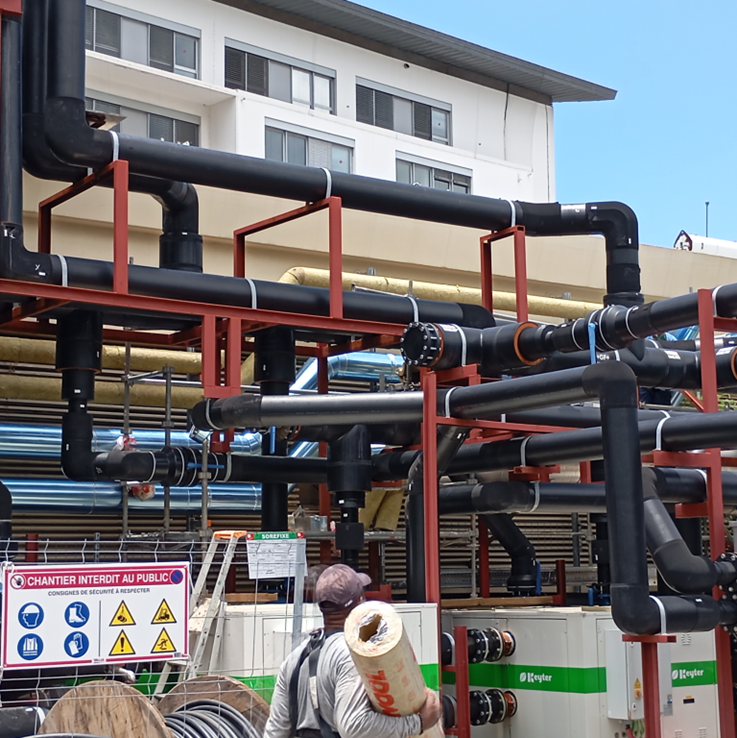
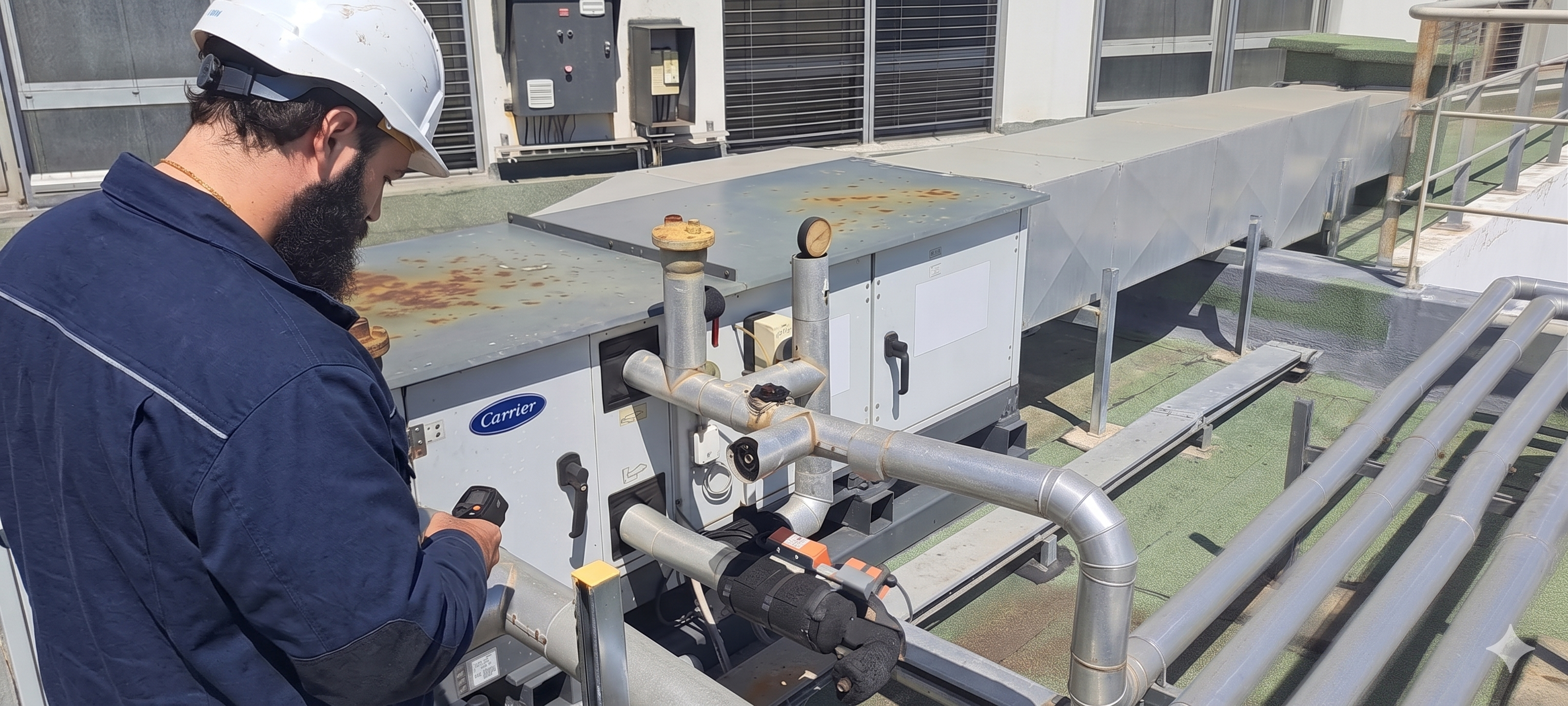
Beyond our flagship projects, we carry out expert studies and project management assignments, contributing our SWAC expertise to concrete, financed operations.
More projects are underway.
We will publish our upcoming references as they are delivered. In the meantime, follow us on LinkedIn for our latest news, missions and publications.
Follow Value Park on LinkedInOur development approach
Projects built in synergy with our marine technologies.
Beyond energy production, we develop projects that leverage the full potential of marine water exploitation: aquaculture, environmental stewardship and circular economy opportunities.
A site, a need, a SWAC or OTEC study?
Tell us about your context: we quickly assess the relevance of a study within the OTEC Lab or a SWAC deployment.